What Is Ice and Water Barrier, and Why Does Your Roof Need It?
Most homeowners notice their shingles first. They see the color, style and finished appearance of the roof, but some of the roof’s most important protective components are hidden underneath. Ice and water barrier is one of those hidden layers.
Installed directly to the roof deck beneath the shingles, ice and water barrier provides added protection in areas where water is most likely to enter the roofing system. Although you may never see it once your roof is complete, the way it is selected and installed can make a significant difference in how well your roof protects your home.
What Is Ice and Water Barrier?
Ice and water barrier is a self-adhering waterproof roofing underlayment installed beneath the shingles. It bonds directly to the roof deck and creates an additional line of defense against moisture.
Unlike standard underlayment, ice and water barrier is designed for the roof’s most vulnerable areas. Depending on the roof and the applicable installation requirements, these areas may include:
- Along the eaves
- In roof valleys
- Around chimneys
- Around skylights
- Near vents and other roof penetrations
- In other areas where water may collect or be driven beneath the shingles
This does not make the entire roof waterproof or eliminate the need for correctly installed shingles, flashing and ventilation. Instead, it supports the complete roofing system by helping protect areas that face an increased risk of water intrusion.
What Does Ice and Water Barrier Protect Against?
Ice and water barrier helps protect the roof deck from moisture that gets beneath the roof covering. That moisture can come from several sources.
Ice Dams
An ice dam may develop when snow melts on a warmer portion of the roof and refreezes near a colder eave. As additional snow melts, water can collect behind the ice and move beneath the shingles. Ice and water barrier provides added protection beneath the shingles if this backup occurs.
Wind-Driven Rain
Rain does not always fall straight down. During strong storms, wind can push water beneath or between roofing materials, especially around edges, valleys and penetrations. A properly installed barrier helps defend the roof deck when wind-driven rain reaches beneath the shingles.
Water Moving Through Roof Valleys
A roof valley is where two roof slopes meet. Because rainwater from both slopes is directed into this channel, valleys can carry a significant amount of water during a storm. This concentration of water makes proper valley installation especially important.
Water Around Roof Penetrations
Chimneys, vents and skylights interrupt the roof’s continuous surface. These areas depend on carefully installed flashing and roofing materials to direct water away from the opening. Ice and water barrier can provide another layer of protection around these vulnerable areas when included in the roofing system.
Is Ice and Water Barrier the Same as Underlayment?
Ice and water barrier is a type of roofing underlayment, but it is not the same as the standard underlayment installed across much of the roof deck. Standard underlayment creates a secondary protective layer beneath the shingles. Ice and water barrier is self-adhering and is specifically designed for areas with a greater risk of water infiltration.
A complete roofing system may use both materials:
- Ice and water barrier in vulnerable areas
- Underlayment across the remaining roof deck
- Properly installed shingles as the primary roof covering
- Flashing, starter shingles and ventilation components where needed
Each layer has a different job. The roof performs best when those components are installed to work together.
Where Should Ice and Water Barrier Be Installed?
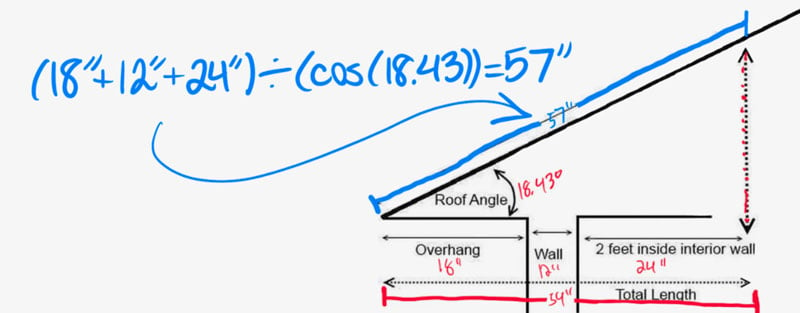
The answer depends on the roof’s design, manufacturer instructions and applicable local building requirements. At the eaves, the barrier must cover the roof overhang, cross the depth of the exterior wall and continue at least 24 inches inside the wall line. Because the material follows the slope of the roof, the roof’s angle also affects how much coverage is needed.
The amount required to reach that point changes based on several characteristics of the home, including:
- The depth of the roof overhang
- The thickness of the exterior wall
- The roof’s pitch or steepness
A home with a deeper overhang or steeper roof may require more material to reach the correct location. That is why measuring only from the edge of the roof can produce an incomplete answer.
Why One Row May Not Be Enough
Ice and water barrier frequently comes in rolls that are 36 inches wide. This can lead to the assumption that one row provides adequate coverage along every eave. However, a 36-inch row does not automatically extend 24 inches inside the exterior wall line.
For example, a substantial roof overhang uses part of that material before the barrier reaches the wall. The roof’s slope also affects how far the material must travel along the deck to provide the required horizontal coverage.
Ice and Water Barrier Calculator
Can You See Ice and Water Barrier After Installation?
No. Once the roof is complete, the barrier is covered by the remaining roofing components. This is one reason documentation and communication are important during a roof replacement. Homeowners should not have to wonder what was installed after the shingles have covered the roof deck.
At Right Rate Roofing, we use photos and project updates to help homeowners understand what is being installed throughout the roofing process. Our goal is to make the hidden parts of the roof easier to see and understand before the project is complete.
Why This Layer Matters in the Tri-State Area
Homes throughout Quincy, Illinois, Hannibal, Missouri, Keokuk, Iowa, and the surrounding communities experience changing Midwest weather throughout the year.
Freezing temperatures, snow, rain, high winds and repeated freeze-and-thaw cycles can all place stress on a roofing system. Ice and water barrier cannot prevent every roofing problem, but it adds important protection in the places where moisture may be most likely to reach the roof deck. The value of a roof is not determined by the shingles alone. It is determined by how every layer is selected, measured and installed.